
Luke Altmann is an Adelaide-based new music composer, curator and gallery director, and runs the de la Catessen Gallery on Anster Street in the CBD.
In the chiptune community Lauren Tomczak and Sebastian Tomczak, as Hidden Village, are internationally recognized. They draw upon an eclectic collection of retro game consoles, such as the Atari 2600, Vectrex, the Sega Master System and Mega Drive, utilising recently developed sound software to create a performance duo. They endeavour to explore the use of relatively unconventional hardware and software in music making, such as the use of mobile phones as homebrew portable instruments and the construction of self-designed digital sequencing devices from scratch as performance.
Additionally, they have designed and implemented a number of physical interfaces for use in musical performance involving light and water as well as an interface for the Vectrex videogame console. They have performed at the Australian Computer Music Conference (2006), the Tyndall Assembly Concert Series (2007), and expanded to perform as Hidden City for the opening of the 2008 Adelaide Festival of Arts, alongside Stephen Whittington, Luke Harrald, Derek Pascoe and the Zephyr Quartet. The closing concert of AFUM 09 is one of Hidden Village’s major performances for 2009, and will feature a keyboard-controlled walkman-mellotron, singing bowls, and live VGA hacking.
Obviously, I had some questions to ask them ahead of this, beginning with a request for their definition of the under-represented art of Chiptune:
HV: Chiptune or chipmusic is the use of obsolete video game consoles and computers in music composition, production, and performance. The movement revolves around the use of sound chips. However, the meaning of the word has changed over time; originally, the term chiptune was used to describe a certain kind of Amiga music in the very late eighties and early nineties, so it was a very narrow use of the word.
Since then, the word has become broader in its application, and today includes music that was made using emulation, music that has its roots in inspiration (music that uses sounds that imitate sound chips rather than emulate), and music that uses traditional instrumentation to complement (or to be complemented by) chipmusic instrumentation. Currently, popular consoles and computers within the chipmusic scene include the Nintendo Game Boy, the NES, the Commodore 64, and the Amiga. However, a wide variety of consoles are in use today.
LA: Most activities of the growing international chiptune community are conducted online. Why are live performances so rare?
HV: Are live performances so rare? They are in Adelaide, but even in Melbourne and Sydney the numbers of concerts and shows featuring Game Boys and Nintendos are increasing. In the US, the UK and Europe, and parts of South-East Asia, live chipmusic performance is more common than here in Australia.
LA: Chiptune music, pervading areas of private entertainment otherwise closed to art music - namely computer and video games - has undeniable connotations of introverted escape. How do people respond to hearing this music in the context of a public concert in room full of strangers?
HV: The responses of people will undoubtedly change depending on the material that is presented as well as their own connection (if any) to these types of electronic sounds. For Hidden Village, chipmusic at its core represents an exploration of decontextualisation and an exploration of constraints - both technical and, as a result, timbral. So in this sense, it is hoped that people do no necessarily connect any feelings of nostalgia directly with our music but, rather, hear these sounds in a new light, in a new context.
LA: Do you perform as though playing a game, thus building a piece out of personal responses to unforeseeable dilemmas hidden from the audience, or do you largely compose pieces in advance with a focus on musical development in the more or less traditional sense?
HV: Our performances are a mix of through-composed music and improvisation in the sense that the structure and form of a work is not set but certain phrases and instrumentation are set beforehand. In our performance for the AFUM, we are combining aspects of chipmusic, live sampling, improvisation, and field recordings, with a healthy dose of humour and reflexivity, as well as some more serious minimalism.
LA: The late Tristram Cary was a pioneer of finding new musical uses for old electrical equipment - starting with discarded WWII navy surplus components - and also played a central role in the institutionalisation of electronic music in Australia. We now see Hidden Village taking a similar do-it-yourself approach as graduates of the Adelaide University's state-of-the-art Electronic Music Unit to which Cary contributed so much. Is this a consciously ironic reaction to the standards of academia or a warm acknowledgement and deep bow to your musical roots? Or both?
HV: I would have to say it's more of a deep bow to our musical roots. The use of DIY aesthetics and ideologies have been a part of electronic music for as long as music has been electronic - this sense still runs strongly through modern music technology academia. However, the use of hacked, modified or subverted obsolete technology - especially hardware-oriented applications - is something that is not so popular today in academic circles… we are all very good at looking forwards and never looking back. So perhaps in a sense there is a little sense of irony, or at least a sense of going against the grain.
LA: It's important to point out that your prominent use of otherwise obsolete and culturally era-specific thus nostalgic equipment does not represent a rejection of current audio technology, which in fact you constantly utilise and explore alongside the vintage models of - for example - Atari and Vectrex. Is this co-existence of old and new employed simply through a need to make various old interfaces compatible with contemporary technology while using their limitations as a structure for performance, or a need or desire to expand the language of musical expression through which you communicate to the public?
HV: We would have to say that the use of obsolete technology in our music and performances represents a need to use a different language of musical expression than what might be otherwise available, especially in the areas of timbre and texture. Technology from different eras has different characteristics and as a result different positive attributes. We don't see a need to exclude certain technologies based on their age or function but rather try to find a use for a range of different technologies in music performance.
Tuesday, March 31, 2009


Monday, March 30, 2009
I'm on Good Game (ABC2) Next Week!
Apparently I will be on Good Game on the ABC2 television channel next week. Good Game is a television program about video games and the video games industry and related culture. So tune in for some chipmusic mania! The episode will also be available online.
Channel: ABC2
Date: 6 April
Time: 8.30 PM
Web: http://www.abc.net.au/tv/goodgame/video/
Channel: ABC2
Date: 6 April
Time: 8.30 PM
Web: http://www.abc.net.au/tv/goodgame/video/
de la Catessen Archive

http://delacatessen.wordpress.com/archive/
The Gallery de la Catessen has a beautiful archive full of all the posters and advertisements for exhibitions, installations and music concerts from the past three or four years.
It is an inspiration to browse through these pages and find so many excellent Adelaide artists and musicians. A huge thanks to Luke Altmann for putting the archive together and for supporting the Adelaide experimental arts and music for as long as he has - he is a true credit to this town.
Programme Announced for AFUM09
Adelaide Festival of Unpopular Music - AFUM 2009
April marks the end of the fourth year of musical activity at de la Catessen. To celebrate, a selection of musicians with a special emphasis on those working in Adelaide’s underground, experimental, and academic fields will present a series of concerts from April 12-23. The programme is as follows:
Sunday, April 12th, 3:30pm
Monday, April 13th, 6:30pm
$20/$15
ALEKSANDR TSIBOULSKI & JACOB CORDOVER
Classical Guitars
Five years after their intensive collaboration at the Banff Centre in Canada, two of Australia’s most gifted young guitarists come together for a one-off reunion tour across Australia. The versatile programme will feature solo sets, and duos, including the rarely heard contemporary virtuosic masterwork “Clocks” by American composer Joan Tower, Antonio Jose’s “Sonata”, and “Three Duets” by Australia’s own guru, Phillip Houghton.
Jacob Cordover resides in Barcelona, and this will be his first concert performance in Adelaide.
Monday, April 13th, 3pm $10/$8
DAVID KOTLOWY: prepared guitar, ruined piano, shakuhachi
ADE SUHARTO: dance
STEVEN KOTLOWY: bowed metallophones
Leading Adelaide composer David Kotlowy gives his final performance here before embarking for an extended stay in Japan as the 2008 recipient of the Bank of Tokyo-Mitsubishi Japan Travel Fund.
Tuesday, April 14th, 10pm $5
DEREK PASCOE
saxophone
Derek Pascoe is among the leading free improvisers in Adelaide, whose rigorous approach to musical self-discipline gives a profound assurance to his rare extended solo public performances.
Wednesday, April 15th, 8pm $5
JASON SWEENEY with Tristan Louth-Robins:
Panoptique Electrical
Panoptique Electrical is both an experimental studio project by Jason Sweeney and occasional collaborations with Zoë Barry, Jed Palmer, Tristan Louth-Robins (live performers) and Steve Phillips (Sensory Projects record label). Sweeney has been composing sound and music scores for live theatre, dance, film/video and installation projects since 1998. The first album Let The Darkness At You was released in 2008. The new album Yes to Fear, Yes to Desire will be released in July 2009 on Sensory Projects/Inertia Music.
Thursday, April 16th, 8pm FREE
CHRISTIAN HAINES
This performance by Christian Haines will an eclectic exploration of the mobile phone, Ligeti, failure aesthetics and the highly relevant amplification of the sound of ice melting.
Sunday, April 19th, 8pm $5
TRISTAN LOUTH-ROBINS
Using a combination of laptop, turntable and iPod, Tristan Louth-Robins (red_robin) creates live electro-acoustic improvisations of rich sonic textures interspersed with restrained melodic gestures and deviations.
Monday, April 20th, 8pm $5
MINIMAX
featuring
LUKE HARRALD - computers
DEREK PASCOE - saxophone
CHRIS MARTIN - piano
As a collaborative project between electronic music teacher Luke Harrald and the gestalt of the accomplished free-impro duo of Martin and Pascoe, MiniMax offers a complex live audio-visual performance.
Tuesday, April 21st, 8pm
BITCHES OF ZEUS
solo sets and trio by
DANIEL VARRICCHIO
PATRICK SARACINO
MOURGOS GRUND
Post-rock-logged sponges of musical performance practice: intuitive, unpredictable, uninhibited, confronting, self-taught, and psychedelic, Bitches of Zeus members Varricchio, Saracino, and Mourgos Grund offer sibylline commentary on unpop-culture.
Wednesday, April 22nd, 9pm
ADAM PAGE SOLO
Adam Page Solo is at the forefront of a new and unique style of performing, recording live instruments into loop pedals and spontaneously composing intricate grooves in many different styles. Primarily a Saxophone player, the instruments Page loops are as diverse as Bass, Keys, Percussion, Vocals, Tuvan Throat Singing, Beat Boxing, Guitar, Flute, Clarinet, Mbira (African Thumb Piano), Didgeridoo and Nose Flute in styles ranging from Funk, Tango and Punjabi to Classical, Jazz and Metal. He has even dabbled in playing drilled out vegetables.
Thursday, April 23rd, 7:30pm
HIDDEN VILLAGE
As Hidden Village, Lauren Tomczak and Sebastian Tomczak are internationally recognised musicians of the online chiptune community. They draw upon an eclectic collection of retro game consoles, such as the Atari 2600, Commodore 64, Vectrex and original Gameboy, utilising recently developed sound software to create a performance duo. They endeavour to explore the use of relatively unconventional hardware and software in music making, such as the use of mobile phones as homebrew portable instruments and the construction of self-designed digital sequencing devices from scratch as performance.
Additionally, they have designed and implemented a number of physical interfaces for use in musical performance involving light and water as well as an interface for the Vectrex videogame console. They have performed at the Australian Computer Music Conference (2006), the Tyndall Assembly Concert Series (2007), and expanded to perform as Hidden City for the opening of the 2008 Adelaide Festival of Arts, alongside Stephen Whittington, Luke Harrald, Derek Pascoe and the Zephyr Quartet.
The closing concert of AFUM is one of Hidden Village’s major performances for 2009, and will feature a keyboard controlled walkman-mellotron, singing bowls, and live VGA hacking.
April marks the end of the fourth year of musical activity at de la Catessen. To celebrate, a selection of musicians with a special emphasis on those working in Adelaide’s underground, experimental, and academic fields will present a series of concerts from April 12-23. The programme is as follows:
Sunday, April 12th, 3:30pm
Monday, April 13th, 6:30pm
$20/$15
ALEKSANDR TSIBOULSKI & JACOB CORDOVER
Classical Guitars
Five years after their intensive collaboration at the Banff Centre in Canada, two of Australia’s most gifted young guitarists come together for a one-off reunion tour across Australia. The versatile programme will feature solo sets, and duos, including the rarely heard contemporary virtuosic masterwork “Clocks” by American composer Joan Tower, Antonio Jose’s “Sonata”, and “Three Duets” by Australia’s own guru, Phillip Houghton.
Jacob Cordover resides in Barcelona, and this will be his first concert performance in Adelaide.
Monday, April 13th, 3pm $10/$8
DAVID KOTLOWY: prepared guitar, ruined piano, shakuhachi
ADE SUHARTO: dance
STEVEN KOTLOWY: bowed metallophones
Leading Adelaide composer David Kotlowy gives his final performance here before embarking for an extended stay in Japan as the 2008 recipient of the Bank of Tokyo-Mitsubishi Japan Travel Fund.
Tuesday, April 14th, 10pm $5
DEREK PASCOE
saxophone
Derek Pascoe is among the leading free improvisers in Adelaide, whose rigorous approach to musical self-discipline gives a profound assurance to his rare extended solo public performances.
Wednesday, April 15th, 8pm $5
JASON SWEENEY with Tristan Louth-Robins:
Panoptique Electrical
Panoptique Electrical is both an experimental studio project by Jason Sweeney and occasional collaborations with Zoë Barry, Jed Palmer, Tristan Louth-Robins (live performers) and Steve Phillips (Sensory Projects record label). Sweeney has been composing sound and music scores for live theatre, dance, film/video and installation projects since 1998. The first album Let The Darkness At You was released in 2008. The new album Yes to Fear, Yes to Desire will be released in July 2009 on Sensory Projects/Inertia Music.
Thursday, April 16th, 8pm FREE
CHRISTIAN HAINES
This performance by Christian Haines will an eclectic exploration of the mobile phone, Ligeti, failure aesthetics and the highly relevant amplification of the sound of ice melting.
Sunday, April 19th, 8pm $5
TRISTAN LOUTH-ROBINS
Using a combination of laptop, turntable and iPod, Tristan Louth-Robins (red_robin) creates live electro-acoustic improvisations of rich sonic textures interspersed with restrained melodic gestures and deviations.
Monday, April 20th, 8pm $5
MINIMAX
featuring
LUKE HARRALD - computers
DEREK PASCOE - saxophone
CHRIS MARTIN - piano
As a collaborative project between electronic music teacher Luke Harrald and the gestalt of the accomplished free-impro duo of Martin and Pascoe, MiniMax offers a complex live audio-visual performance.
Tuesday, April 21st, 8pm
BITCHES OF ZEUS
solo sets and trio by
DANIEL VARRICCHIO
PATRICK SARACINO
MOURGOS GRUND
Post-rock-logged sponges of musical performance practice: intuitive, unpredictable, uninhibited, confronting, self-taught, and psychedelic, Bitches of Zeus members Varricchio, Saracino, and Mourgos Grund offer sibylline commentary on unpop-culture.
Wednesday, April 22nd, 9pm
ADAM PAGE SOLO
Adam Page Solo is at the forefront of a new and unique style of performing, recording live instruments into loop pedals and spontaneously composing intricate grooves in many different styles. Primarily a Saxophone player, the instruments Page loops are as diverse as Bass, Keys, Percussion, Vocals, Tuvan Throat Singing, Beat Boxing, Guitar, Flute, Clarinet, Mbira (African Thumb Piano), Didgeridoo and Nose Flute in styles ranging from Funk, Tango and Punjabi to Classical, Jazz and Metal. He has even dabbled in playing drilled out vegetables.
Thursday, April 23rd, 7:30pm
HIDDEN VILLAGE
As Hidden Village, Lauren Tomczak and Sebastian Tomczak are internationally recognised musicians of the online chiptune community. They draw upon an eclectic collection of retro game consoles, such as the Atari 2600, Commodore 64, Vectrex and original Gameboy, utilising recently developed sound software to create a performance duo. They endeavour to explore the use of relatively unconventional hardware and software in music making, such as the use of mobile phones as homebrew portable instruments and the construction of self-designed digital sequencing devices from scratch as performance.
Additionally, they have designed and implemented a number of physical interfaces for use in musical performance involving light and water as well as an interface for the Vectrex videogame console. They have performed at the Australian Computer Music Conference (2006), the Tyndall Assembly Concert Series (2007), and expanded to perform as Hidden City for the opening of the 2008 Adelaide Festival of Arts, alongside Stephen Whittington, Luke Harrald, Derek Pascoe and the Zephyr Quartet.
The closing concert of AFUM is one of Hidden Village’s major performances for 2009, and will feature a keyboard controlled walkman-mellotron, singing bowls, and live VGA hacking.
Sunday, March 29, 2009
8BC Open Mic Podcast #3: little-scale
Silreq says: "We are priviliged to hear an absolutely bad-ass set by little-scale, which he performed live using a GBA SP with nanoloop 2.3 and a midified Sega Megadrive (a.k.a. genesis) played with a keyboard. The episode begins with me explaining why certain chiptune artists names confuse me, then little-scale makes Robot cry. And we end the show with some superb one channel craziness. So open a jar of vegemite, grab some ticks of toast, and get ready for a real treat!!!"
Thread is here. MP3 download is here.
Credits for this episode:
sally zero - for intro
little-scale - for live set
Chalices of the past - for outro
silreq - for sh*tty background music during interview and post show bullsh*t session
Thread is here. MP3 download is here.
Credits for this episode:
sally zero - for intro
little-scale - for live set
Chalices of the past - for outro
silreq - for sh*tty background music during interview and post show bullsh*t session
Candlelit Outdoor Dinner for Earth Hour
 We had our two dinner party couples over for dinner last night (Brent and Cathy Mercer and Jason and Ruth Kelly), partly in order to celebrate Earth Hour. So it was our turn to host and cook, and I was quite happy with what we had on offer.
We served homous and vegetable sticks, special fried rice with mushrooms, fried onion, spring onion, chilli, sprouts and sesame oil as well as capsicum, zucchini, mushroom and Cantonese BBQ Pork tofu shish kebabs. This was served along side sushi and with a mango sorbet as dessert. I hope the other two couples enjoyed it.
Friday, March 27, 2009
Frog Guiro!

My dad came back from a six week trip in Iran and brought back for me a lovely little frog guiro. Looks great and sounds great.
Thursday, March 26, 2009
I Am 8-Bit

Our good friends David and Emma brought back a nice gift when they returned from their holiday in Melbourne - this book titled "I Am 8-Bit: Art Inspired by Classic Videogames of the '80s". Thanks guys!
Wednesday, March 25, 2009


Tuesday, March 24, 2009

Go Get A Real Job: Art Is Not Genuinely Useful
From 'Advice for Fresh Graduates During Tough Times' by Ben Stein
"First, learn a genuinely useful skill. Abstract art and conceptual sculpture are great if your parents are wealthy. But if times are lean, as they are for most of us, learn to do what people need done: medical care of all kinds (the shortage of nurses gets more acute every week, and wages are skyrocketing), accounting, engineering that is used in defense, and any kind of work connected to the criminal justice system (crime is an ever-growing menace)."
"First, learn a genuinely useful skill. Abstract art and conceptual sculpture are great if your parents are wealthy. But if times are lean, as they are for most of us, learn to do what people need done: medical care of all kinds (the shortage of nurses gets more acute every week, and wages are skyrocketing), accounting, engineering that is used in defense, and any kind of work connected to the criminal justice system (crime is an ever-growing menace)."
Aussie Chipmusic Directory Update
I have updated the Australian Chipmusic Directory. It now contains sections for Artists, Releases and Compilations. But there is still plenty of work to be done, so please, send in your information for your releases!
http://aussiechip.milkcrate.com.au/
http://aussiechip.milkcrate.com.au/
Monday, March 23, 2009
Abrasive on LSDJ Microtuning
Abrasive has done some amazing work!
"Idle thought: can LSDJ be retuned to non-standard tunings?
Cue a few minutes in a hex editor and half an hour in Perl...
the result: an LSDJ tuning script.
The script takes an LSDJ ROM, and rewrites the tuning table (and optionally the note names) into a new copy of the ROM. Frequencies can be manually specified (all 108 notes), or generated in equal temperament, cent steps, cent series or ratio series.
The latest version of the script (works with LSDJ 3.9.9) can be found at
http://bur.st/~abrasive/lsdj_tune/
Some examples:
24-tone equal temperament
lsdj_tune --et 24 --base A5 440 --rom lsdj.gb --out lsdj_et24.gb
12-tone ET, manually
lsdj_tune --cents 0,100,200,300,400,500,600,700,800,900,1000,1200 --base A5 440 --rom lsdj.gb --out lsdj_et12.gb
Wendy Carlos' alpha scale
lsdj_tune --cstep 78 --base 0 70 --rom lsdj.gb --out lsdj_alpha.gb
Pythagorean 13-tone
lsdj_tune --ratio 1,256/243,9/8,32/27,81/64,4/3,729/512,1024/729,3/2,128/81,27/16,16/9,243/128,2 --names D,Eb,E,F,F#,G,G#,Ab,A,Bb,B,C,C# --base 0 73.42 --rom lsdj.gb --out lsdj_pyth.gb
Current limitations:
Base frequency specification is a bit dumb - it won't take custom note names, and sequences (--cents, --ratio) always start on the base note."
Thread is here: http://www.8bitcollective.com/forums/viewtopic.php?pid=169505
"Idle thought: can LSDJ be retuned to non-standard tunings?
Cue a few minutes in a hex editor and half an hour in Perl...
the result: an LSDJ tuning script.
The script takes an LSDJ ROM, and rewrites the tuning table (and optionally the note names) into a new copy of the ROM. Frequencies can be manually specified (all 108 notes), or generated in equal temperament, cent steps, cent series or ratio series.
The latest version of the script (works with LSDJ 3.9.9) can be found at
http://bur.st/~abrasive/lsdj_tune/
Some examples:
24-tone equal temperament
lsdj_tune --et 24 --base A5 440 --rom lsdj.gb --out lsdj_et24.gb
12-tone ET, manually
lsdj_tune --cents 0,100,200,300,400,500,600,700,800,900,1000,1200 --base A5 440 --rom lsdj.gb --out lsdj_et12.gb
Wendy Carlos' alpha scale
lsdj_tune --cstep 78 --base 0 70 --rom lsdj.gb --out lsdj_alpha.gb
Pythagorean 13-tone
lsdj_tune --ratio 1,256/243,9/8,32/27,81/64,4/3,729/512,1024/729,3/2,128/81,27/16,16/9,243/128,2 --names D,Eb,E,F,F#,G,G#,Ab,A,Bb,B,C,C# --base 0 73.42 --rom lsdj.gb --out lsdj_pyth.gb
Current limitations:
Base frequency specification is a bit dumb - it won't take custom note names, and sequences (--cents, --ratio) always start on the base note."
Thread is here: http://www.8bitcollective.com/forums/viewtopic.php?pid=169505
Bitwise XOR in Max/MSP

I don't think that Max/MSP has a bitwise XOR object, which is a little annoying. Correct me if I am wrong.
EDIT: I've of course been (somewhat) corrected on this: a much simpler example - thanks skrasms:

Nitro2k01's Shitwave

Game Boy musician and programmer extraordinaire Nitro2k01 writes:
"Little-Scale recently posted All 4-bit Waveforms That Have 32 Samples, a Max patch that would generate all possible wave frames that could be used with LSDj, given gazillions years. However, the result was a little boring because it would start out as a 1/32 PWM and slowly progress towards a longer and longer PWM. Even within many years, chances are you’d still have a very low duty PWM.
So I decided to find an algorithm that would produce more interesting sounds and still cycle through all 1632 possibilities. My choice was a Pseudo Random Number Generator using a Linear Feedback Shift Register. Actually not completely unlike the one in the Gameboy’s noise generator."
Nor sure that I would describe my outcome as "boring" - I prefer the term minimalist - but his approach is fantastic. Read all about it and download it here: http://gameboygenius.8bitcollective.com/wordpress/2009/03/23/shitwave-a-prng-based-drone-generator-for-gameboy/
PAL Sega SMS + NTSC NES "in tune" at last?!
I quite like the idea of writing duets for Sega Master System and Nintendo Entertainment System - however, this requires that I use a MIDINES. Although MIDINES is a fantastic tool, there is no PAL tuning mode.
This is something that has often made things more annoying for me when writing music for NES and other instruments, as it means that my PAL NES running an NTSC MIDINES is always out of tune with other instruments. However, it is in tune with itself.
Well, my SMS MIDI interface has both a PAL and an NTSC mode but it only occured to me today to actually switch it to NTSC mode but run the interface on a PAL machine - and voila, it was in tune with the MIDINES!
Fun times ensued.
Something so obvious is so very obvious now.
This is something that has often made things more annoying for me when writing music for NES and other instruments, as it means that my PAL NES running an NTSC MIDINES is always out of tune with other instruments. However, it is in tune with itself.
Well, my SMS MIDI interface has both a PAL and an NTSC mode but it only occured to me today to actually switch it to NTSC mode but run the interface on a PAL machine - and voila, it was in tune with the MIDINES!
Fun times ensued.
Something so obvious is so very obvious now.
Joanne O'Callaghan: Ca Va?

For those of you that know Joanne O'Callaghan and are reading this blog post - a small number of people perhaps - will know that Jo was a very dear friend of mine in high school.
I went and saw Ca Va? last night, the cabaret show that Joanne wrote, directed, stars in and sings in. It was extremely impressive. Radiant energy, explosive humour and well-told stories are the staple of this solo show.
I would strongly recommend if anyone has the chance to see Ca Va? (or any other show of hers) to go and check it out. I'm proud of her - not in a patronising sort of sense, but proud that I have friends that are as amazing and talented as Jo.
You can read a more in-depth review of Ca Va? here.
Sunday, March 22, 2009
LSDJ Tuning Tables
GB / GBC / GBA Tuning Table:

Super GB Tuning Table:
A quick note that regardless of emulator settings, KiGB only reads from the SGB table, not the standard one. Special thanks to Nitro2k01 for his help and double checking the KiGB bug. Here is a video of LSDJ with 15-TET tuning. Special thanks to Abrasive for the idea of course as well.

Super GB Tuning Table:

A quick note that regardless of emulator settings, KiGB only reads from the SGB table, not the standard one. Special thanks to Nitro2k01 for his help and double checking the KiGB bug. Here is a video of LSDJ with 15-TET tuning. Special thanks to Abrasive for the idea of course as well.
Saturday, March 21, 2009
Nanoloop Tuned to 18-TET! (Hacked ROM)
 18-TET = 18 divisions of the octave instead of 12 (which is standard for western tuning). Special, special thanks to Abrasive for his help and his idea with this - all of the credit goes to him of course. On left, the original ROM with its frequency lookup table intact, and on the right the edited ROM with the 18-TET lookup table.
As far as I can tell, the lookup table starts at 0x730a and is 144 bytes long.
So normally, each different pitch is a semitone apart from the next pitch in Nanoloop, right? So 12 notes make up an octave.
By editing the frequency table, we can change the space between notes - so we can edit the tuning.
Instead of there being 12 pitches per octave, there are now 18 in the above example (ie. each step of pitch in Nanoloop is now only 2/3s of a semitone instead of a full semitone). It doesn't have to be 18, but thats just what I wanted to experiment with.
You could easily change the tuning to just intonation, 1/4 tone steps, ragas or middle eastern scales, or many other flavours of microtonality.
To generate my table, I used a spreadsheet. I'm sure that Abrasive has some super-smart way of doing it, but hey this is just how I did this. Not sure how correct it is, but yeah - if you want the spreadsheet, you can get it here: http://milkcrate.com.au/_other/downloads/spreadsheets/nanoloop_tuning.xls
One column had the MIDI notes from 0 to 127. The next column had the resulting frequency, based on the MIDI note. The formula I used was: Frequency = 440 * 2 ^ ((Note - 49) / 12)
The next column then had the appropriate data value to send to the Game Boy's audio register, based on the frequency of the note. The formula I used was: Data = (- 131072 / Frequency) + 2048
The next column had the data value as a hex number.
The next column had the resultant frequency, based on the audio register - this column shows you how the tuning compares to the actual frequency. The formula I used was: Frequency = 131072 / (2048 - Data)
The final four columns represented the (potentially) 16-bit data word.
For nibble 3 (the most significant one) I used the formula: dec2hex of: (Data / 4096) % 16.
For nibble 2: dec2hex of: (Data / 256) % 16.
For nibble 1: dec2hex of: (Data / 16) % 16.
For nibble 0: dec2hex of: (Data % 16
These four nibble columns are then copied and pasted into the ROM at the correct point. By changing the MIDI notes to fractions of whole numbers, different tuning can be obtained. Remember that each percentage point of a MIDI number is equal to a cent in musical interval terms.
In the spreadsheet, Nanoloop only uses the data in rows 27 - 90 it seems. This data area is marked in blue.
All 4-bit Waveforms That Have 32 Samples

I built a patch that will generate and play all 4-bit waveforms that have 32 samples.
For those that use LSDJ - the well-known Game Boy music tracker - this configuration will seem very familiar of course.
There are 16 ^ 32 possibilities. The patch plays 100 different waveforms for every second, at a constant frequency of 440 Hz. At this rate it will take 1,079,028,307,100,000,000,000,000,000 centuries to complete.
Friday, March 20, 2009
All 4-bit Waveforms That Have 512 Samples
I wrote a patch that will generate and then play all possible 4-bit waveforms that have 512 samples. After a little refinement, I plan to leave the patch running for an extended period of time.


Example Video:


Example Video:
Thursday, March 19, 2009
Tomczak Speaks At Forum
I spoke at music technology forum today at university.
The things I spoke about included:
• Electrofringe in Newcastle, 2008
• Sound Bytes Round 1 in Melbourne, 2008
• International Computer Music Conference in Belfast, 2008
• TechFest in Mumbai, 2009
• Arduino
• Arduino Drum Machine
• Arduino Dot Matrix Printer Rhythm Machine
• Arduino VGA Generation
• Arduino VGA Hacking
• Chiptune Technology
• EPROM Music
• Milkcrate Project
It didn't go too badly.
The things I spoke about included:
• Electrofringe in Newcastle, 2008
• Sound Bytes Round 1 in Melbourne, 2008
• International Computer Music Conference in Belfast, 2008
• TechFest in Mumbai, 2009
• Arduino
• Arduino Drum Machine
• Arduino Dot Matrix Printer Rhythm Machine
• Arduino VGA Generation
• Arduino VGA Hacking
• Chiptune Technology
• EPROM Music
• Milkcrate Project
It didn't go too badly.
Wednesday, March 18, 2009
Australian Chipmusic Releases Directory
I have started to put together a directory of Australian Chipmusic releases. This might be important in the future. At any rate, it's given me an excuse to listen to some fantastic music by chr15m!
If you have anything to add, please let me know.
Here we go: http://aussiechip.milkcrate.com.au/
If you have anything to add, please let me know.
Here we go: http://aussiechip.milkcrate.com.au/

New Anamanaguchi Album: Dawn Metropolis

Okay, so it's not that new, but hipster chipsters Anamanaguchi have a new album out! The music - and the presentation - are amazing. And $5 for a download version of the album is just fantastic value, considering how great their first EP was.
Get it here: http://www.dawnmetropolis.com/
Monday, March 16, 2009
paraPhase: Parameter Phaser for Sega Mega Drive

I've become interested in the idea of a parameter phaser. So consider a melodic phase or an isorhythm (where the rhythm and the melody of a single voice have different lengths). What if we applied this idea to a set of parameters of a monophonic voice?
The Sega Mega Drive is perfect for a practical realisation of this idea - it seems to have a nice number of parameters to control the four operators that make up each voice.
ParaPhase is a Max/MSP patch that sequences the main parameters for each voice in a sixteen step sequence - but each parameter can have its own independent length. Thus, it's a parameter phase sequencer!
The results have been interesting and worthwhile; I can't wait to explore this idea further.
little-scale: Always By Your Side (1)

A minimalist approach to Sega Master System music.
For my wife Lauren.
For my wife Lauren.
10K Brand 30min Challenge - 'Grey Area'
Thursday, March 12, 2009
Drum Machine Compilation

The long awaited and long worked on Drum Machine Compilation is here! I've got a track on this one called "Strange Weather", which was written using an Atari POKEY chip with all four channels in noise mode.
From the original compilation brief by Kezziebeat:
"Due to a song I created just a couple of days ago, I became inspired to start this compo. I want to make a compilation of songs using only kick drums and noise. Yes, only drums. No leads, no melodies, no arps (even slutty ones). I want to see what people can create when they only have a beat to work with.
RULES!
• You can use any hardware or software
• No leads. (I will allow a bassline if people really find it hard)
• Must use the noise channel
• Must use kick drums
• You are allowed to use samples"
Track Listing:
01 - minusbaby - Santería, Nº1
02 - Chalices of the Past - lgpt1ch iv
03 - Enviromental Sound Collapse - 505 Diving
04 - Fluxxin - Siblicide
05 - Infradead - Sewer Lines Need Loving 2
06 - Kraettz - High Voltage DMG
07 - little-scale - Strange weather
08 - Krazer - Like Stomp on Acid
09 - Motone - Chaos Controlled
10 - Note! - 3D Beet Jam
11 - Ovenrake - Atari Teenage Food Fight
12 - Shaun Carley - Percursion Discussion Deploys
13 - Emartransformo - Shoulda Coulda
14 - Sparkyboy - Dirt
15 - Tom Woxom - Format Disk
16 - Swampyboy - Gabberfad
Thanks to Keff for the artwork, to Motone for mastering, to Subway Sonicbeat & Retro-bot Records for hosting, and to all the artists who took part! (And, might I add, milkcrate for providing the hosting space).
Get it here: http://milkcrate.com.au/kurt/releases/Drum_Machine_Compilation.zip
More Wedding Photos!
Lauren and I received the "official" photos from CTR Photos yesterday. They have been added to the wedding photo set, which can be viewed below:
Wednesday, March 11, 2009


Sega Master System MIDI: A Different Noise Mapping
I have grown sick of the way I was mapping MIDI data to the noise channel on the Sega Master System, which is why I have updated the interface a little bit.
Now, the following table shows the way in which the MIDI data is mapped to the noise channel parameters. I am quite a bit happier with this, as it makes sequencing and composing for the system less awkward. The mapping is true for all cases of each pitch.

Now, the following table shows the way in which the MIDI data is mapped to the noise channel parameters. I am quite a bit happier with this, as it makes sequencing and composing for the system less awkward. The mapping is true for all cases of each pitch.

Thursday, March 05, 2009
Chipsters: Aussie Chipmusic Compilation II


Okay, so if you are interested in Australian chipmusic or chipmusic in general, this would be a great compilation to grab! Sixteen awesome artists, a bunch of cool gear and a really big variety of tracks - what more could you want from a free electronic music download?
DOWNLOAD
http://milkcrate.com.au/_other/downloads/mp3s/chipsters.zip
CREDITS
- Compiled by Astro Zombies and little-scale.
- Front cover image design and manipulation by little-scale.
- Back cover image design and manipulation by little-scale, Freezedream, Cloud Sparrow and Dot.AY.
- Original back cover image by the Flickr user tico24 available here:
http://www.flickr.com/photos/tico24/16066110/in/photostream
- Original back cover image available under a creative commons attribution 2.0 generic license:
http://creativecommons.org/licenses/by/2.0/deed.en
TRACKLISTING
1 . Derris-Kharlan: Mirrors
2 . Ten Thousand Free Men & Their Families: Bitch-Whipped
3 . Maddest Kings Alive: Cagey Negotiators
4 . Astro Zombies: Code Blue
5 . AndyExpandy: supermegapowerup
6 . little-scale: Will You Remember Me?
7 . (alt)Bro: Franchise Fascination
8 . Vytantus: Melancholy Frivolity
9 . Jacko: Among The Gum Trees
10 . cTrix: WednesdayChip
11 . Dot.AY: Dirigible Spacecraft
12 . Ubey: swsh
13 . Celsius: Wi-Fry
14 . Godinpants: liphe
15 . Freezedream: Happy Sixty Four
16 . The LOLstralians: Botany
Lyndon Warren: Schooling the Old

"To write some smart analysis of classic video games with an emphasis on what designers could learn from them today. To do so at least once per week. To avoid snark unless it's absolutely necessary. To be humorous if it's at all possible. To be at least readable in terms of grammar and spelling. To avoid getting off topic. To fail gracefully at all those aims. "
I am very much looking forward to what appears on his blog.
Wednesday, March 04, 2009
Under Clocked SN76489: Timbral Droner!

This is a follow on from a previous post.
I have extended the Max/MSP patch a little to give the user some control over timing and the amount of phase change. I have also made it so that all three voices can be used. Two of the three pitched voices can have their phase altered independently from one another.
The result is a hypnotic droning sound (see the sonogram above). Video is below:
Under Clocked SN76489: Let's Change The Duty Cycle!
This is a follow on from a previous post.
Some further experimentation with the under clocked SN76489 revealed that it is possible to change the duty cycle of the sound output without too much effort.
Imagine that we have two periodic waveforms playing, and that they are slightly out of tune with one another. We will hear a phasing effect, because as the two waveforms move from being perfectly in time with one another (ie. peaks and troughs occur for both at the same time) to being completely out of time with one another (ie. while one waveform has a peak, the other has a trough and vice-versa), we hear this continuous phase movement.
Now, imagine that we have two oscillators that have the same waveform and are perfectly in tune with one another. What would happen if we detune one of the oscillators only for a brief moment, only to make it in tune with the other oscillator again? Well, we have effectlively changed the phase relationship between the two oscillators.
The summing at the chip's audio output of the two waveforms that have the same frequency and shape but are out of phase with one another to some extent (not 180˚) will produce different amounts of cancellation and summation, depending on where one waveform is in its cycle in comparison to the other.
I wrote a Max/MSP patch that adjusts the phase of the two oscillators over time. You can listen to what might be the most obvious set of changes here:
http://milkcrate.com.au/_other/useless/interesting%20part.mp3
Below, you can see the changes in spectrum. The sonogram represents the audio that you can hear in the above audio example:

If you feel like it, you can listen to a full cycle of this discrete changes in phase here (the length is about 5 minutes):
http://milkcrate.com.au/_other/useless/sn76489%20phase%20differences%20full%20cycle%201.mp3
Below, you can see a set of five waveforms taken from throughout the first audio example above:


Some further experimentation with the under clocked SN76489 revealed that it is possible to change the duty cycle of the sound output without too much effort.
Imagine that we have two periodic waveforms playing, and that they are slightly out of tune with one another. We will hear a phasing effect, because as the two waveforms move from being perfectly in time with one another (ie. peaks and troughs occur for both at the same time) to being completely out of time with one another (ie. while one waveform has a peak, the other has a trough and vice-versa), we hear this continuous phase movement.
Now, imagine that we have two oscillators that have the same waveform and are perfectly in tune with one another. What would happen if we detune one of the oscillators only for a brief moment, only to make it in tune with the other oscillator again? Well, we have effectlively changed the phase relationship between the two oscillators.
The summing at the chip's audio output of the two waveforms that have the same frequency and shape but are out of phase with one another to some extent (not 180˚) will produce different amounts of cancellation and summation, depending on where one waveform is in its cycle in comparison to the other.
I wrote a Max/MSP patch that adjusts the phase of the two oscillators over time. You can listen to what might be the most obvious set of changes here:
http://milkcrate.com.au/_other/useless/interesting%20part.mp3
Below, you can see the changes in spectrum. The sonogram represents the audio that you can hear in the above audio example:

If you feel like it, you can listen to a full cycle of this discrete changes in phase here (the length is about 5 minutes):
http://milkcrate.com.au/_other/useless/sn76489%20phase%20differences%20full%20cycle%201.mp3
Below, you can see a set of five waveforms taken from throughout the first audio example above:


Under Clocked SN76489: Big Bass!


I have been experimenting with an under clocked SN76489 sound chip. This particular sound chip is the same as is found in a number of video game consoles, most relevantly the Sega Master System. In many ways it is quite a limited chip - for example it has three pitched pulse wave channels, whose duty cycle can't be set. Another limitation is the frequency range, which is actually relatively small and only has 1024 steps.
Normally (on the Sega, for example) there isn't much bass at all (ie. the chip can't go very deep in pitch), which is why I thought I would underclock a discrete SN76489 and see what it sounds like. I underclocked it by just under half - therefore extending the range by about one octave downwards (but of course sacrificing range and resolution in the upper octaves).
I am sure that anyone who listens to chiptune is aware of the phasing sound produced by two square waves that are slightly out of tune with each other. By (very slightly) detuning two of the channels on the SN76489, I was able to make some interesting timbres. The thing to listen to in this example are the changes in the harmonics as well as the changes in timbre. I have set the detune amount by only one data point between the two waves, and as such the phasing effect that you might hear with a more detuned pair of waveforms resolves into discrete timbres with abrupt changes instead of a continuously changing effect - although the difference is "only" a difference in temporal perception, it's actually a large subjective difference, (or that's what I think at least).
Listen to an example here:
http://milkcrate.com.au/_other/useless/underclocked%20sn76489%20bass.mp3
Tuesday, March 03, 2009
Yesterday, I Thought Of You
From Lauren's blog:
"As part of the Adelaide Fringe 09, a group of inspirational DIY/ street artists have put together the FORMAT festival, which includes a whole bunch of DIY workshops, a zine hub, street art projects and much more. Embedded in the Format festival is ST5K - literally, STreet 5000 (Adelaide’s postcode). I’ll be exhibiting some free, DIY-style works on Friday 6th March at NotCoffee as part of a giant ST5K group exhibition. It will be called ‘Yesterday, I thought of you’."
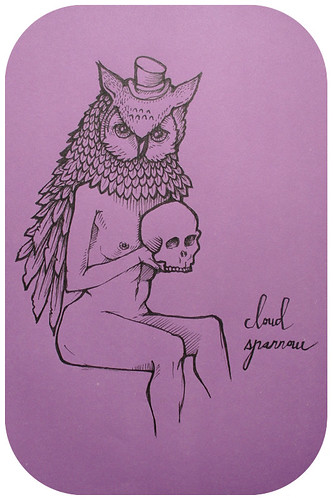
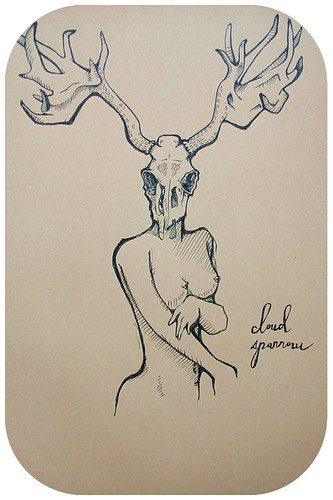
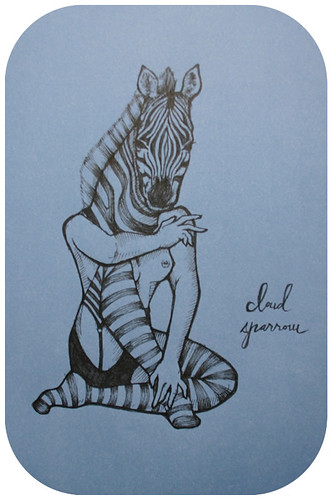
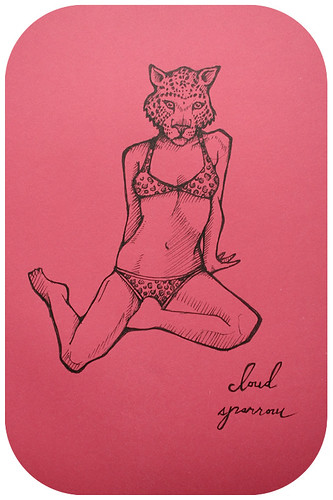
"As part of the Adelaide Fringe 09, a group of inspirational DIY/ street artists have put together the FORMAT festival, which includes a whole bunch of DIY workshops, a zine hub, street art projects and much more. Embedded in the Format festival is ST5K - literally, STreet 5000 (Adelaide’s postcode). I’ll be exhibiting some free, DIY-style works on Friday 6th March at NotCoffee as part of a giant ST5K group exhibition. It will be called ‘Yesterday, I thought of you’."
little-scale and Chris Soole Gig Last Night


Chris Soole and I played a set last night at the Wheatsheaf as part of the Adelaide Fringe Festival. I felt it went pretty well, and Chris seemed happy with it too. I should point out that I had not met Chris before we went on stage, and that Chris had never heard of chiptune before last night.
If given the chance, I would happily play another show with Chris, I had a great time last night and his attitude was fantastic - what a great guy.
You can download an audio recording of the set here.
Monday, March 02, 2009
MM - Da Tixmape vol. 2
MM writes: "So, here it is, the official second issue of my Tixmape series. I'm not a DJ or such. I just got inspired by the mixtape sharing project here at 8BC to do the first issue (which I'm going to reupload soon) and I want to continue this project irregularly. so from time to time I want to put together half an hour of finest chiptune stuff for your pleasure. it only contains favorite tracks of mine. see it as an extension of my work at lotek64. additionally you can see my personal music taste quite good in this mix: sweet melodies and hard beats."
Who is on the mixtape?
little-scale - Dallas, Four AM
.sylCMYK - All I Want
Arms Akimbo - My Best Friend
Rainbowdragoneyes - Blue Sky
Capkonamco - Umbrella (Remix)
Animal Style - DMG Guitar
Carl Brown - Further Hearts
Dunderpatrullen feat. Wiklund - Taekwondo Princess
Steve featuring Georges Beauvoir - When Will I See You Next Again?
Who is on the mixtape?
little-scale - Dallas, Four AM
.sylCMYK - All I Want
Arms Akimbo - My Best Friend
Rainbowdragoneyes - Blue Sky
Capkonamco - Umbrella (Remix)
Animal Style - DMG Guitar
Carl Brown - Further Hearts
Dunderpatrullen feat. Wiklund - Taekwondo Princess
Steve featuring Georges Beauvoir - When Will I See You Next Again?
Photos of Our Wedding!
I have started putting together a pool of photos of our wedding.
You can see the first batch of photos here. Expect more content soon.
You can see the first batch of photos here. Expect more content soon.
Sunday, March 01, 2009
little-scale: green, blue and purple

"Green, Blue and Purple is just some more straightforward, laid back Game Boy music - nothing more, nothing less."
track listing
01. Green, Blue and Purple [9:15]
download
http://www.milkcrate.com.au/little-scale/little-scale_green_blue_and_purple.zip
Fringe Festival: The Blue Collection


I went to see an excellent live performance last night which was part of The Blue Collection exhibition at Art Space in the Festival Centre, in Adelaide. This was a part of the ongoing Adelaide Fringe Festival.
Three performers - Eugene Ughetti, with Matthias Schack-Arnott and Fleur Green - played a percussion performance work on a set of blue glass works that were (for the most part) created specifically as glass percussion instruments. Objects such as bowls, cups, plates and saucers as well as more obsure shapes such as domes and a number of 'glass xylophones' occupied Arts Space.
The performance itself was amazing, so congratulations to the percussionists and to Eugene, the composer of the works. Of course, I do have to mention that it was all very serious business, which I'm not sure is always a good thing but that it just my take on it. I suppose an absolute sense of seriousness fits well with certain art music situations, but maybe I'm a tad too sarcastic and cynical these days, I don't know.
The exhibition and the performance were presented stunningly - with an excellent sense of balance and space. I have seen similar percussion and music-type events to this one at various festivals in the past.
However, I do have to say that what sets this one apart from the rest is that the glass and the objects are not treated as a superficial gimmick used to draw in crowds. Instead, the exploration of object and sound is carried out to an intense depth, and this is something that shone through in the musical work as well as the way in which the performers treated their instruments.
To some degree, I am reminded of the idea of focused listening versus textured listening. While a different approach to composition using these objects might have resulted in music that favoured an overall, more general mode of listening, the spacial elements and the mix and voicing of the glass objects definetely encouraged a more focused mode of listening.
In a way, this work reminds me of a sort of anti-musique concrete. What do I mean with this? Well, instead of de-clicheing found objects and their sounds using recording technology, objects that appear to be found objects but are in fact specifically created instruments. Furthermore, the setting of the objects in an exhibition space seems to highlight the idea that many of the objects seem to have a prototypical function, and the visual nature of the performance helps to marry this idea of function with the sounds that are created.
Finally, I have to say that when people come to a concert, they should act like they are coming to a concert. They shouldn't leave halfway through a movement. They shouldn't leave their mobile phones switched on. They shouldn't enter after half an hour.
Subscribe to:
Posts (Atom)
